Emergency Water Removal in Centennial: Response Steps and Pricing
When water is rising in your Centennial home, you need a precise plan, not marketing fluff. This technical walkthrough lays out exactly what happens from the moment you call Centennial Water Restoration to the moment your property is dry, decontaminated, and documented for your insurance carrier. Every step below reflects IICRC S500 standards, the same protocol our certified technicians follow on every job across central Indiana.
You will see specific equipment counts, moisture targets, drying timelines, and price ranges so you can make an informed decision at 11pm with two inches of water in your basement. Centennial Water Restoration has operated in Centennial since 2018, holds a BBB A+ rating, and our crews are IICRC certified in Water Damage Restoration (WRT) and Applied Structural Drying (ASD). If your situation is outside our scope, we will tell you directly and refer you to the right specialist. No upsells, no scare tactics, no surprise invoices. Use this guide as a checklist while you wait for our truck to arrive, or as a reference if you are vetting providers before signing a work authorization. The numbers below are the same ones we quote on site after a free moisture inspection.
The 2 AM Call: Why Response Time Decides Your Bill
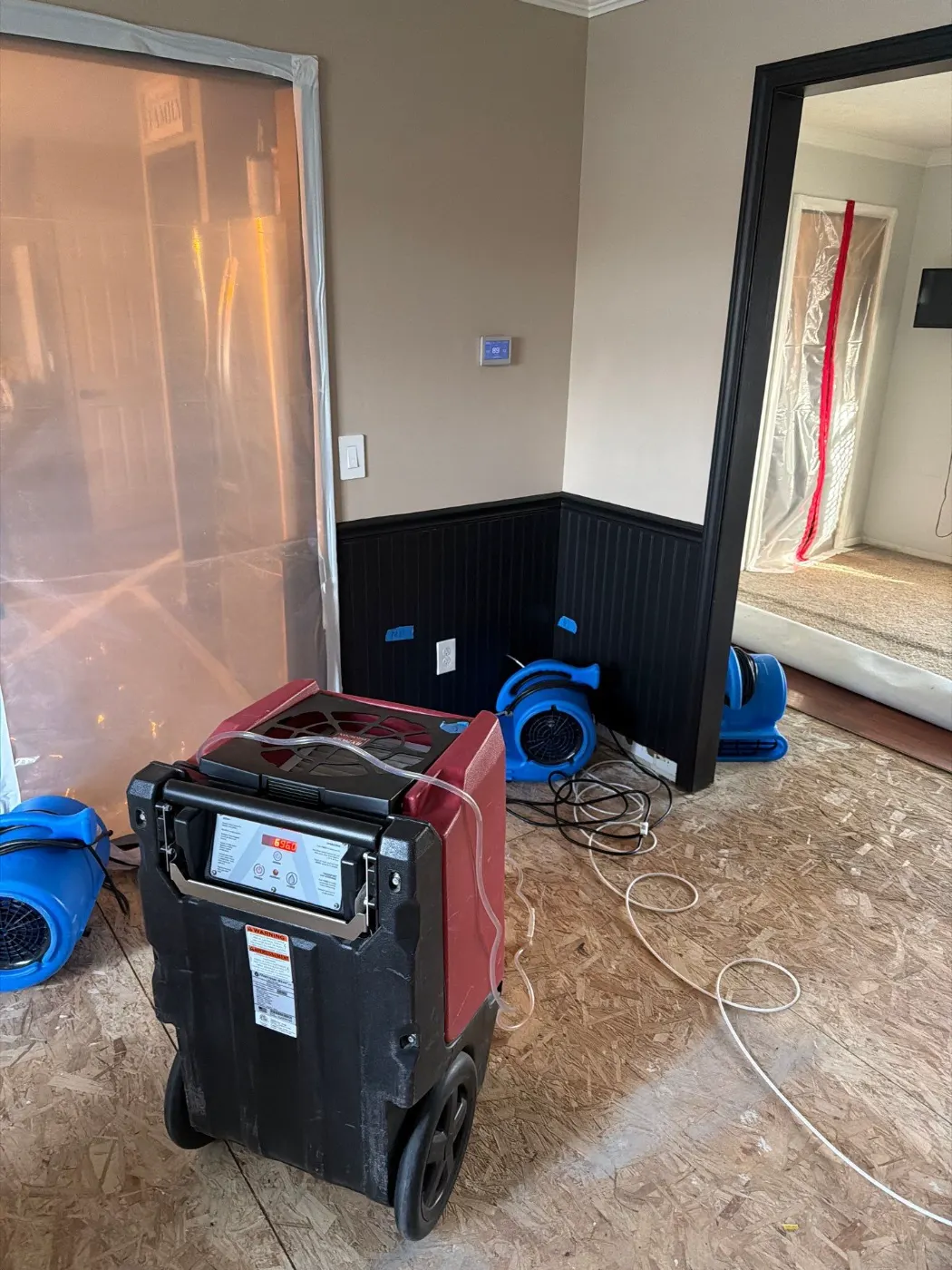
Back to that homeowner in Centennial. When our technician arrived, he metered the moisture in the subfloor at 38 percent. Anything over 16 percent in wood is wet. He pulled base trim, drilled weep holes in the drywall to release trapped water, and had three submersible pumps and an extraction wand running inside of an hour. By sunrise, standing water was gone. Twelve air movers and two commercial dehumidifiers stayed on the property for four days. Total invoice came in just under $4,200, fully covered by her homeowner policy minus a $1,000 deductible.
Compare that to a job we walked into in a Centennial neighborhood three months later. Different homeowner, similar leak, but he waited until morning to call anyone, then waited two more days for a handyman who told him to rent fans from a hardware store. By the time he called us, the drywall was buckling, the laminate flooring was cupped beyond saving, and mold colonies had already started on the back of the baseboards. That job ran north of $11,000 because we were no longer doing water mitigation. We were doing demolition and reconstruction. The 24 to 48 hour mold window is real, and it is the single biggest cost multiplier we see.
What to Do Before We Arrive
While the truck is on the way, shut off the water at the main if you can do so safely. Kill power to any affected rooms at the breaker. Move anything you can lift off wet flooring. Take photos of everything before you move it, every angle, every room. Do not lift soaked rugs or sectionals on your own, you will hurt your back and damage what might otherwise be salvageable. For a deeper checklist, see our notes on first steps after water damage.
One Last Story Worth Telling
A retired teacher in Centennial called us on a Saturday after her dishwasher supply line let go while she was at her grandson's baseball game. She came home to water reaching the dining room. She did three things right before we arrived: she shut the valve under the sink, snapped 40 photos on her phone, and pulled area rugs onto the back deck. Those three moves saved her roughly $2,000 on the final invoice and gave her adjuster everything he needed. Her claim closed in eleven days.
Insurance, Deductibles, and Direct Billing
One Centennial family we worked with last spring had a sump pump fail during a thunderstorm. Six inches of water in a finished basement, ruined sectional, soaked carpet pad, the works. They were terrified about the bill. We documented everything with moisture maps, photos, and daily drying logs, then billed their insurance carrier directly. Their out of pocket was the $1,500 deductible. The total claim ran $9,800. That documentation is not optional. Carriers want IICRC compliant drying logs, and a contractor who cannot produce them will get your claim shorted or denied. If you want the full walkthrough on this, our guide to filing a water damage insurance claim covers the language adjusters look for.
Your Next Step in Centennial
Every minute standing water sits, secondary damage compounds. Mold colonization begins at the 24 to 48 hour mark, drywall wicks moisture upward at roughly one inch per hour, and subfloor swelling becomes irreversible after 72 hours. Centennial Water Restoration runs emergency crews around Centennial 24 hours a day, every day of the year. Call now for a free on site assessment, transparent pricing in writing, and IICRC certified extraction that starts within 90 minutes of dispatch. If we are not the right fit for your specific loss, we will tell you on the first call.
What Fast Actually Means in Centennial
When Centennial Water Restoration says emergency response, we mean a technician on site, typically within 2 hours inside Centennial city limits, faster if you are near our service hub. We do not mean a callback from a dispatcher who promises to find someone tomorrow. One restaurant owner near downtown Centennial called us at 6 PM on a Sunday after a third floor toilet supply line failed and ran for hours. We had four technicians, an extraction truck, and six dehumidifiers on site by 7:30 PM. They were back open Thursday morning. A delayed response would have cost them a full week of revenue plus a full commercial water restoration rebuild.
Our trucks are stocked and staged, not dispatched cold. That matters at 2 AM. A landlord in Centennial once told us he had called three other companies before us, and every one of them said the same thing: someone will call you back in the morning. By morning, his tenant's hardwood was a write off. We took the call at 11:47 PM and were extracting water by 1 AM. The tenant kept her floors. The landlord kept his tenant.
When We Tell Homeowners to Wait
Not every wet floor needs a $4,000 mitigation job. A Centennial homeowner called us last fall after a 20 gallon aquarium tipped over in a tiled bathroom. He had towels down, the water never touched drywall or subfloor, and the tile was sealed properly. We sent a tech out for a free moisture inspection. He metered the grout, confirmed nothing had migrated under the tile, and told the homeowner to run a box fan for 24 hours and call us if anything changed. No charge. We would rather build a relationship than invent a job. If your loss is small and contained, we will say so.
How Pricing Actually Works
People hate vague pricing answers, so here is the honest version based on what we charge in Centennial. A small Category 1 loss, meaning clean water from a supply line or appliance, with extraction and three to four days of drying in a 200 to 400 square foot area, typically runs $1,500 to $3,500. A flooded basement with Category 2 water, the kind that comes from a washing machine or seepage, usually lands between $3,500 and $7,500 depending on square footage and how much material has to come out. Category 3 losses, which include sewage backups or floodwater from outside, start around $7,000 and climb quickly because of contamination protocols. We break that down further in our piece on why sewage backup is a Category 3 emergency.
What drives the number on your invoice is not a mystery. It comes down to:
- Square footage of affected area and number of rooms involved
- IICRC water category (1, 2, or 3) and the safety gear and disposal that requires
- How long water sat before extraction began
- How many air movers and dehumidifiers your structure needs and for how many days
- Whether subfloor, drywall, insulation, or cabinetry has to be removed
Frequently Asked Questions
How fast can Centennial Water Restoration reach my Centennial home for emergency water removal?
Most Centennial addresses see a Centennial Water Restoration crew on site within 60 to 90 minutes. Outlying neighborhoods or active storm events may push that to two hours. Dispatch runs 24/7, including holidays.
What does emergency water removal actually cost in Centennial?
Most jobs fall between $1,200 and $5,500. Category 3 sewage losses, multi-room saturation, or jobs requiring demolition and content pack-out can run $7,000 to $20,000 or more. Centennial Water Restoration provides a written scope before work begins.
Will my homeowners insurance pay for this?
Sudden and accidental water losses are usually covered. Gradual leaks, sewage backups without an endorsement, and rising flood water typically are not. Centennial Water Restoration bills carriers directly and documents the loss in Xactimate so your adjuster has what they need.
How long does drying take after the water is removed?
Standard residential drying in Centennial runs 3 to 5 days when extraction starts within 24 hours of the loss. Hardwood floors, plaster walls, and dense framing can extend that by several days.
Do I need to leave my house during water removal?
For Category 1 clean water losses, most Centennial families stay in unaffected rooms. For Category 3 sewage or large-volume losses with heavy demolition, temporary relocation is safer and sometimes covered as additional living expense by your policy.
Have a restoration question?
Our IICRC certified Centennial crew is ready to help. Free assessments, estimate based on what we can sees, no pressure.