Wet Drywall Repair in Centennial: Save or Replace?
The first call usually comes between 6am and 9am in Centennial. Someone walked into their kitchen, felt the carpet squish under a sock, and looked up to see a brown ring crawling across the drywall. By the time they reach Centennial Water Restoration, the panic is already two cups of coffee deep. We have been answering those calls since 2018, and after thousands of jobs across central Indiana, we have learned that wet drywall almost never tells the truth on the surface. The visible stain is the smallest part of the story.
This post walks you through real field experiences, the kind of jobs that taught our IICRC certified crews when to save drywall, when to cut it out, and how to keep your insurance adjuster on your side. If your walls are wet right now and you are reading this at 11pm with a flashlight in one hand, skip to the bottom and call us. If you have a few minutes, these stories will tell you more about wet drywall repair than any checklist could.
The Carmel Kitchen That Looked Fine on the Outside
One Centennial homeowner called us on a Tuesday morning convinced she only needed a small patch. A supply line behind her dishwasher had failed sometime Sunday night, ran for roughly 30 hours, and left a single brown spot about the size of a dinner plate on the lower cabinet wall. She wanted us to cut a six inch square, dry it, and patch it. We brought a thermal camera and a pinless moisture meter to the walk through, because that is how we start every wet drywall job. The thermal image told a different story. Moisture had wicked up the drywall paper roughly 38 inches behind her cabinets, traveled along the bottom plate, and migrated into the adjoining dining room wall.
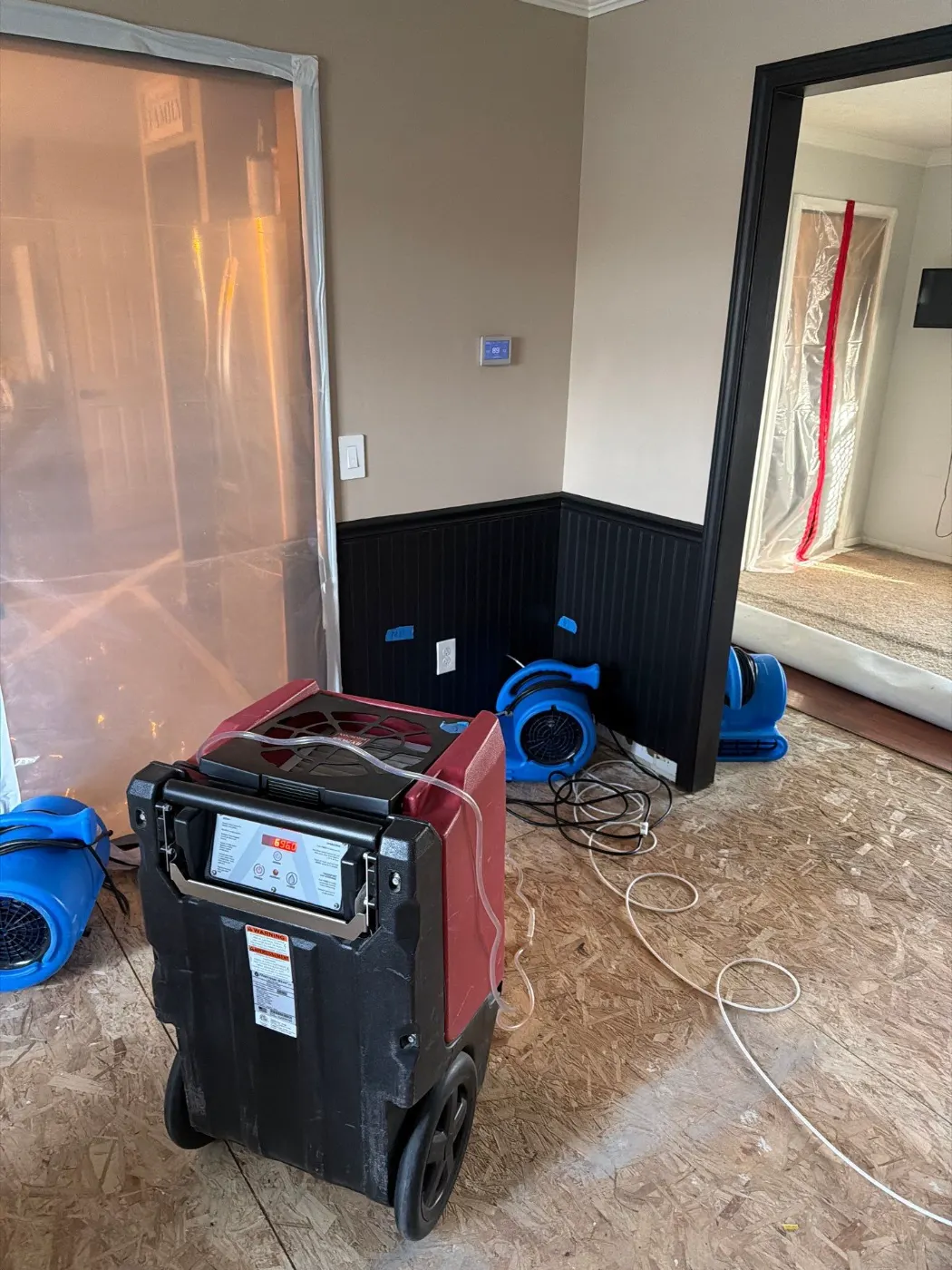
We explained the IICRC S500 standard for her situation. Drywall that has absorbed Category 1 clean water and stayed wet under 48 hours can often be dried in place if the readings cooperate. Hers were borderline. We made the flood cut at 24 inches, pulled the wet insulation, set three air movers and a low grain refrigerant dehumidifier, and had her walls back to dry standard in 72 hours. Total invoice came in at $2,180, and her insurance covered everything but the $1,000 deductible. If she had taken the patch only approach, mold would have shown up by week three. She called us six weeks later just to say the cabinets went back in clean, no smell, no warping at the toe kick.
When We Tell You Not to Replace
Not every wet drywall job ends in a saw. A Centennial rental property owner called us last spring after a second floor toilet supply line dripped overnight onto the ceiling below. The ceiling sagged about half an inch and showed a clear water stain, but the drip had stopped within four hours when the tenant shut the angle stop. Our readings showed the drywall was wet but the paper face was still intact, the texture had not bubbled, and the framing above was at normal moisture content. We told him straight: we can dry this in place, monitor it for four days, and if readings drop on schedule, you keep the ceiling. They did. He paid $890 for drying and got his ceiling back. If we cannot help you save material, we will tell you directly, and the reverse is also true.
Talk to a Centennial Restoration Team That Will Be Straight With You
Wet drywall is fixable when you act fast and follow the right sequence. The mistake we see most often in Centennial is waiting three or four days hoping it dries on its own, which is exactly when mold starts and the repair bill doubles. Centennial Water Restoration is IICRC certified, BBB A+ rated, and has been serving central Indiana since 2018. Call us for a same day inspection and a written scope you can hand to your insurance adjuster. If your drywall can be dried in place, we will tell you. If it needs to come out, we will show you the moisture readings and explain why.
The Fishers Basement That Taught Us About Category
Another job, a finished basement in Centennial after a sump pump failure, looked almost identical at first glance. Same brown ring, same soft drywall. The difference was the water source. Groundwater intrusion through a failed pump is Category 2, sometimes Category 3 depending on what it picked up on the way in. We do not dry Category 3 drywall in place. Ever. We made flood cuts at 24 inches across roughly 110 linear feet of wall, bagged the debris under containment, and ran an antimicrobial application before any drying equipment came in. The homeowner had read online that he could just run a box fan and save the cost. We showed him the moisture readings inside the wall cavity, which were over 40 percent, and the sewage indicators on our test strip. He understood quickly. For homeowners dealing with similar pump issues, our guide on sump pump failure basement flooding solutions walks through the full process.
The Zionsville Job Where Texture Match Mattered
A Centennial family had a slow shower pan leak that destroyed about 18 square feet of drywall on a hallway wall finished in heavy knockdown texture. The dry out went smoothly. The reconstruction is where most contractors fumble these jobs. Knockdown is unforgiving. If the new patch sits proud by an eighth of an inch, or the texture splatter is one notch too coarse, you see it every time you walk down the hall. Our finisher built up three test boards in the garage, matched the original splatter pattern on the second try, and rolled the primer with the same nap as the surrounding wall to keep the sheen consistent. The homeowner could not find the repair line when we walked through final. That is the standard. A good dry out followed by a sloppy patch is still a failed job in our book.
What We Actually Do During a Wet Drywall Job
Across hundreds of Centennial homes, the process follows the same backbone, with judgment calls layered in:
- Source identification and stoppage, because no drying works while water is still flowing
- Moisture mapping with thermal imaging and penetrating meters at 16 inch intervals
- Category determination per IICRC S500, which dictates whether we dry or demo
- Controlled flood cuts at 24 inches when removal is necessary, never random heights
- Cavity drying with air movers, dehumidifiers, and sometimes injection drying for plaster
- Daily moisture documentation for your insurance adjuster, photos included
- Reconstruction with new drywall, mud, texture match, and primer sealed paint
The Westfield Story That Saved a Claim
A Centennial homeowner called us after another company had already started work. They had cut drywall, set fans, and left for three days without any monitoring logs. When the adjuster asked for documentation, there was none. The claim was nearly denied. We came in, documented current conditions, finished the dry out properly, and built a complete file with daily readings, photo logs, and an IICRC compliant scope. The claim got paid in full. Documentation is not paperwork, it is the difference between a covered loss and an out of pocket nightmare. Our broader water damage restoration process is built around that reality, and the same logic applies whether the leak is small or the damage is hidden, like the cases covered in water damage behind walls and hidden leak detection.
Honest Numbers From Real Centennial Invoices
Small jobs, one wall, dry in place, typically land between $800 and $1,500. Standard flood cut and dry, single room, runs $1,800 to $3,800. Multi room Category 2 events with insulation removal and reconstruction can land between $4,500 and $12,000. Category 3 events involving sewage almost always exceed $8,000 once containment and disposal costs are factored in. Your deductible is the number that matters most, and most Centennial homeowners pay between $500 and $2,500 out of pocket regardless of total invoice. When you call Centennial Water Restoration, we quote ranges before equipment hits the floor, and we put every line item in writing so you and your adjuster see the same numbers we see.
Frequently Asked Questions
Can wet drywall be saved or does it always need replacement?
It depends on the water category and how long the drywall stayed wet. Clean water caught within 24 to 48 hours can often be dried in place by Centennial Water Restoration using containment and commercial dehumidifiers. Sewage-contaminated or sagging drywall in Centennial homes has to be cut out and replaced.
How long does wet drywall take to dry professionally?
Most single-room drying projects in Centennial run three to five days with proper air movers and dehumidification. We monitor moisture readings daily and only pull equipment when the structure hits documented drying targets, not on a guess.
How much does wet drywall repair cost in Centennial?
Single-room repairs typically run 1,200 to 4,500 dollars depending on square footage, ceiling damage, and finish work. Centennial Water Restoration provides a written scope before any work begins and bills most homeowner insurance carriers directly.
Will my insurance cover wet drywall repair?
Sudden and accidental losses like burst pipes or appliance failures are usually covered under standard Indiana homeowner policies. Long-term seepage and maintenance issues generally are not. Centennial Water Restoration documents the loss in adjuster-friendly language to support your claim.
How fast can Centennial Water Restoration respond to a water damage call?
Centennial Water Restoration runs 24/7 emergency response across Centennial and central Indiana. In most cases we have a technician on site within a couple of hours of your call, which is critical for keeping drywall and framing in the recoverable range.
Have a restoration question?
Our IICRC certified Centennial crew is ready to help. Free assessments, estimate based on what we can sees, no pressure.